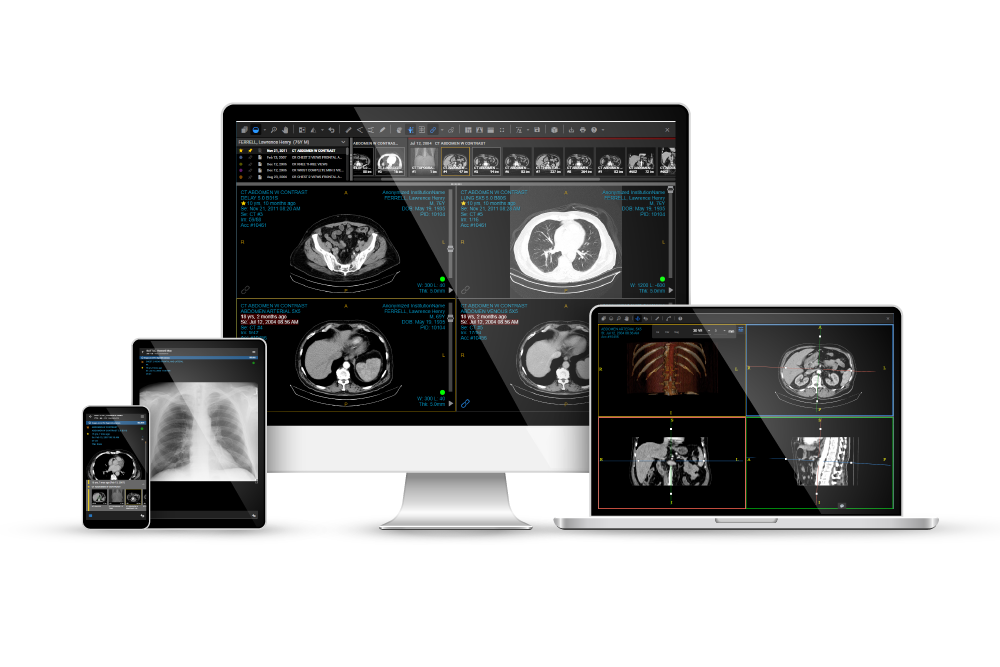
Trauma Image Management & Exchange (TIME™) is a service from lifeIMAGE to help Level I and Level II trauma units securely collect medical images, reports, and other relevant files from referring sites via secure Internet. Some of the service highlights are:
- Trauma centers can assign remote site sharing credentials with permanent or temporary privileges
- Referring sites do not need any software to upload
- Members of the trauma team can elect personal email, text, or pager alerts for incoming information
- Optionally, referring sites can upload non-DICOM information with any file format
- Incoming information can be shared throughout the trauma facility and with the local PACS and EMR
- Single monthly fee for unlimited number of transfers
http://www.flickr.com/photos/39794995@N02/sets/72157623918085259/show/
*Product screens contain fictional PHI
By electronically receiving imaging information before a transfer is even initiated, trauma centers can remotely consult on cases early, avoid unnecessary transfers, and improve the speed and accuracy with which trauma decisions are made. The service is HIPAA-compliant, and does not require sending sites have software from lifeIMAGE.
The problem with CDs.
It takes too long to share critical diagnostic images across unaffiliated emergency departments, and too many trauma patients are re-imaged after they are transferred. A December 2009 study in The American Journal of Surgery found that more 53% percent of trauma patients undergo duplicate imaging exams after being transferred.
At the root of this inefficiency is the patient CD – the most widely used vehicle for sharing exams across non-networked sites. Reliance on CDs to share imaging wastes time, and often results in patients undergoing unnecessary scans.
CDs are unreliable, contain problematic third-party viewers, and allow limited sharing. Some facilities re-image trauma transfers because they cannot access the contents of a CD, or because they cannot get exams to the PACS or EMR. TIME avoids rescanning transfer cases because the prior exams will already be in electronic, standardized format and easily shared within the hospital, and imported to PACS if desired.
Ensure appropriate transfers & prep time.
A research study featured by the American Association of Orthopedic Surgeons this year found that 52% of emergency orthopedic patients were inappropriately transferred to another facility for treatment. In addition to ensuring the accessibility of prior exams, TIME gives receiving trauma centers the ability to review exams in the cloud, even before a transfer is initiated, and make early decisions on transfer request.
This early access also creates more time for surgical teams to prepare personnel and resources for emergency procedures. When CDs cover the same geography as the transfer patient, precious time is wasted.
How the service works.
With just an Internet connection, sending sites can quickly e-share diagnostic image data to trauma centers using the TIME service. TIME does not require that the sending site have a relationship with lifeIMAGE, or have a virtual private network (VPN) connection. Image data is securely uploaded to the receiving trauma team’s cloud-based TIME DropBox, where clinicians and administrators at the trauma center can view, and if desired, download them to their local system. TIME also provides workflow for receiving trauma centers to incorporate outside exams into patients’ internal medical records.
Optionally, trauma center’s frequent sending sites may opt to deploy the lifeIMAGE Smart Agent (lisa™), a small application that can be used by affiliated referring sites for advanced uploading capabilities. With lisa, the referring site can query and retrieve imaging data directly from a PACS or modality. Additionally, lisa allows the referring facility to include non-DICOM files or to convert files to DICOM for inclusion with the patient’s imaging studies. Some examples may be reports, discharge summary, medication history, allergy information, or photos and non-DICOM images.