Press Releases

Back to Press Releases

lifeIMAGE Launches LINCS to Provide Practice-Based Physicians with Easy Access to Medical Imaging Information Beyond the Health System

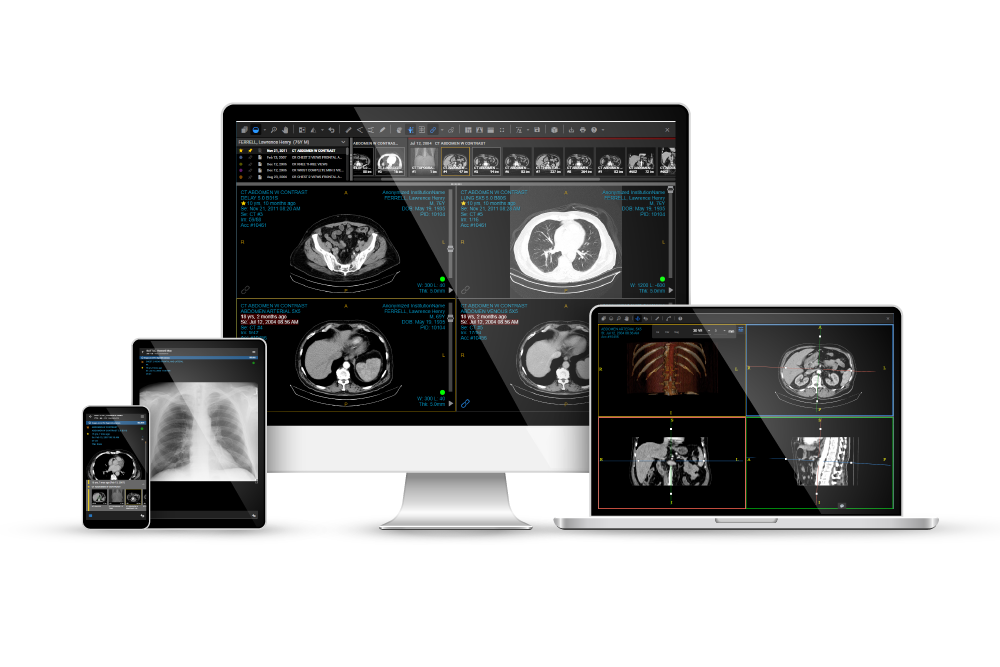
LINCS to launch at RSNA, showing integration with advanced technology from Vital Images and ClearCanvas viewing platforms

Media event Tuesday to showcase lifeIMAGE’s role in RSNA’s Image Share, and discuss ‘what’s next’ in simplifying image sharing for all healthcare stakeholders

FOR IMMEDIATE RELEASE

NEWTON, MA – November 21, 2011 – lifeIMAGE, the nation’s leading provider of solutions for universal e-sharing of medical images, will launch its new LINCS service at the 2011 Radiological Society of North America (RSNA) conference. The network is designed to help physicians improve patient care and reduce costs by ‘setting free’ medical images, allowing physicians to share medical images and associated information with each other, with medical centers and with their patients. LINCS eliminates information system and geographic barriers, allowing images to be shared everywhere, whether it’s with the hospital down the street or a specialist on the other side of the world.

lifeIMAGE will also host a press briefing at RSNA on innovations and advances in image sharing technology including the company’s critical role in the NIH-funded Image Share program, on Tuesday, November 29, at 3:30 p.m. CST.

“lifeIMAGE pioneered image sharing technology, so it’s appropriate that we are playing a central role in national efforts to take image sharing to the next level,” said Hamid Tabatabaie, co-founder and CEO of lifeIMAGE.“Imaging is the second-most costly component of healthcare spending, right behind pharmaceuticals. Advancing image sharing technology will reduce healthcare costs and improve patient care, which is especially critical during this time of healthcare reform.”

LINCS CREATES NEW PHYSICIAN NETWORK

An extension of lifeIMAGE’s existing platform, LINCS is a network that allows physicians to connect and exchange imaging information with existing colleagues, as well as specialists they may never have met. Using LINCS, a primary-care physician who needs to connect with an expert pediatric radiologist for a patient consult can use the LINCS directory function to find and contact an appropriate connection. Once the contacted physician approves the connection, the physicians then can share and view images throughout the patient-care process – instead of relying on patients to shuttle images back and forth on CDs.

“We need to eliminate the CD problem,” Tabatabaie said. “It’s a terrible and pervasive issue. When a patient brings a CD with images to a clinician, the file often won’t even open. It wastes time for the physician and the patient, and it’s costly for the healthcare system and potentially harmful to the patient when redundant images have to be taken or multiple appointments made. Radiology has an opportunity to play a leading role in fixing a badly broken system of distributing imaging results.”

LINCS allows physicians and patients to quickly receive imaging and other medical records, and provides a platform for these records to be seamlessly added to personal health records (PHRs) or institutional electronic medical record (EMR) systems. LINCS creates a unified communication platform for medical image sharing that has significant benefits for both providers and patients. Providers can easily and quickly access patients’ test results, allowing for more accuracy and fewer tests; they can also use LINCS to share test results and clinical work with referring physicians or patients, who in turn can share the information as needed. Patients can then access their records as needed, and have the peace of mind that their healthcare providers have access to their most current medical images.

LINCS adds a new dimension of physician access for the healthcare system. lifeIMAGE co-founder Amy Vreeland tells a very personal story of how LINCS can connect physicians – and benefit patients. When her father’s diagnosis in Montana suggested the need for hip replacement, Vreeland created a LINCS account and connected with a specific orthopedic surgeon in Boston. That surgeon reviewed the images to determine if her father would be a good candidate for a specialized treatment. A successful connection was made, and soon Vreeland’s father received the most appropriate treatment.

“My dad got the right treatment from the best possible doctor – and importantly, he didn’t have to fly across the country to get the right advice,” said Vreeland, who is senior vice president of product management at lifeIMAGE.

LIFEIMAGE IS A CORNERSTONE OF RSNA IMAGE SHARE PROGRAM

Also at RSNA, Tabatabaie and David Mendelson, M.D. will discuss ‘what’s next’ in medical image sharing. This includes the RSNA Image Share program, a secure, web-based image-sharing network that today is being piloted at five academic institutions. The goal of the RSNA Image Share program is to improve coordination among providers, other healthcare professionals, software developers and vendors to improve communication between physicians, healthcare systems and patients.

Image Share, which was launched by RSNA in 2009 with a grant from the National Institute of Biomedical Imaging and Bioengineering (NIBIB), uses lifeIMAGE’s services to power several aspects of the program. At this year’s RSNA, lifeIMAGE will demonstrate an end-to-end set of services to enable image sharing services across hospitals, physicians and patients. These services are run entirely on standards-based lifeIMAGE technology.

NEW PARTNERSHIPS

At RSNA, lifeIMAGE also will announce new partnerships with several leading technology companies:

“RSNA presents a unique opportunity for a frank exchange and dialogue with thought leaders and top experts in the field of medical image-sharing,” Tabatabaie said. “The most effective way to make a significant change to patient outcomes is through collaboration, and I look forward to candid discussions on how best to ensure image-sharing technology transforms the delivery of health and patient care.”

CHILMARK RESEARCH

In order to increase understanding of image exchange, lifeIMAGE has commissioned Chilmark Research to assess the evolving needs and uses of this technology by hospital systems and physicians. Chilmark is conducting both primary and secondary research to create a framework for evaluating how these services are being adopted by the market today and how they will be increasingly utilized in the future. The first phase of the analysis is available now and may be requested by media or by visiting www.lifeimage.com/chilmark. All RSNA attendees are invited to participate in the second phase of the analysis by responding to a survey designed by Chilmark Research at the lifeIMAGE booth.

ABOUT LIFEIMAGE

lifeIMAGE provides a broad set of solutions for universal e-sharing of diagnostic imaging information. These products connect hospitals, radiology groups and physicians to their patients everywhere. lifeIMAGE makes it possible to securely deliver or receive patient imaging information wherever needed from wherever the information originates.

The goal of the lifeIMAGE platform is to help avoid duplicate exams and eliminate unnecessary patient exposure to excessive radiation. In an era of concerns about rising healthcare costs, lifeIMAGE is investing in a platform that helps advance patient care, while reducing $10 billion to $15 billion of unnecessary costs. lifeIMAGE was named one of the most innovative technologies by The Wall Street Journal as part of its international 2010 Technology Innovation Awards. lifeIMAGE solutions are deployed at nation’s leading healthcare institutions and academic medical centers.

CONTACT

Jackie Walsh, Director of Marketing
jackie@lifeimage.com
(617) 744-9359